
When you’re writing a book, it’s easy to get so caught up in the story that you end up on a rabbit trail. A rabbit trail is a detour away from the main focus of your book. How can you tell if you’re on a rabbit trail, and how do you find your way back?
First of all, don’t overthink it during the writing process. You’ll hear me say that a lot. Writing sometimes requires a hop down a rabbit trail, just to get the thoughts from your heart to paper. Structuring and organizing belong to the editing stage, and that comes later.
However, if you wander too far down a rabbit trail while writing, it might wear you out. You might be tempted to put your project on hold, thinking you’re not making progress. On that type of rabbit trail, you want to find the way back to your main path.
Follow the Main Idea Path
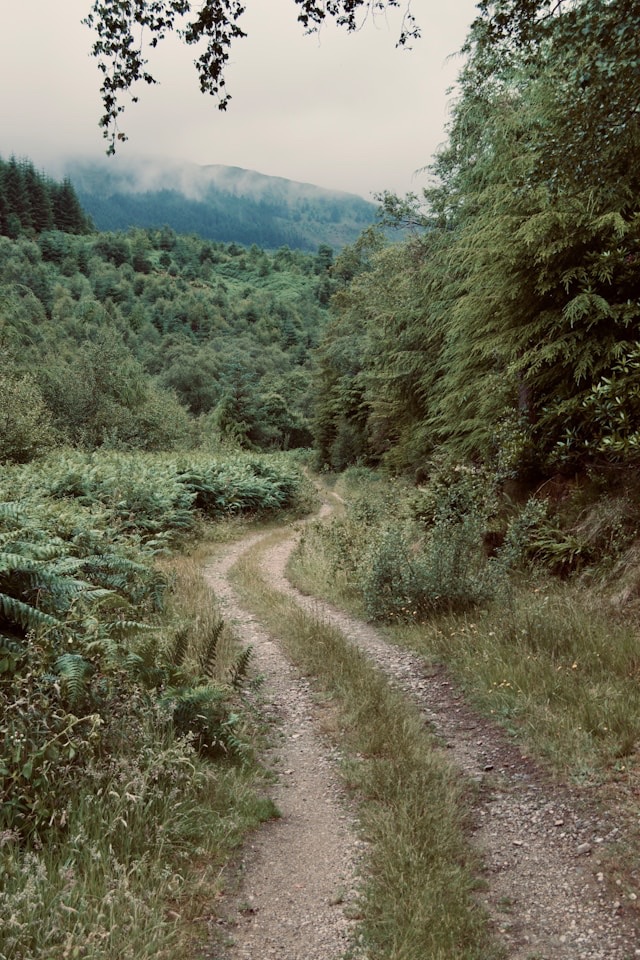
If you end up on a rabbit trail, how do you get back to the main path? It helps to think about the main idea of your book. That’s the journey you’re taking the reader on. Let’s call it the Main Idea Path. You promise to lead your reader along the Main Idea Path from beginning to end—with cool discoveries along the way.
It’s a good idea, when you start writing for the day, to remind yourself of the Main Idea Path and where it leads. Then you are free to explore with your writing along the way. It’s like setting off on a nature trail, while keeping in mind how to find the park exit.

With that bigger picture in mind, you will probably notice when you’ve headed off on a rabbit trail. You’ll start realizing you are heading away from the Main Idea Path. Or if you’re already off and running on that rabbit trail and feel totally lost, you’ll be able to find your way back by refocusing on the main idea.
You might have one main idea for the book as a whole, plus a main focus for each section. Let’s say you’re writing a life story. Each section of your story will have its own focus. But the overall book focus will be to show the reader your life-changing journey through that period of time.
A Life Story Path
Let’s look at an example from one of the books I’ve edited. It’s the story of a man recovering from a debilitating injury. He made a complete recovery! His book invites readers along the Main Idea Path that leads from injury to recovery.
The path will no doubt include personal growth and transformation, along with how the injury affected his family. Those are some of the sights to see along the Main Idea Path. Other sights might include how he became injured, what his recovery goals were, what support he had.

In telling his story, he might end up on a rabbit trail that’s still important to the writer, even interesting, but it’s not taking the reader along the promised path. What if the writer starts talking about his school year back in first grade? Is that part of the Main Idea Path, or is it a rabbit trail? He is writing his life story, after all, and first grade was part of his life. But was it part of injury to recovery—his readers’ path in this book he’s writing?
Backtracking to talk about his elementary school experience might be relevant if he mentions an injury that set him up for problems later. He might flash back briefly and tie it into his current injury.
But if he starts talking about daily conversations in the lunch room in first grade, that’s probably a rabbit trail. It may be a humorous trail that brings him a smile. But he won’t end up including it in his book.
Relevant or Rabbit Trail?
What are other examples of relevant sights that might appear along the Main Idea Path of this life story of injury to recovery? And where might rabbit trails pop up?
His path might include things related to his medical prognosis, treatment, challenges, progress. He might even talk about a health care practitioner who played a major role in his recovery.
But let’s say he goes into detail about that practitioner’s background: where she grew up, what her family is like, where they went on their vacation. At that point, the writer has meandered onto a rabbit trail of a story about the health care practitioner.
After writing about how the practitioner’s daughter won the spelling bee, the writer would probably notice the growing word count and think, Wait a minute. What am I writing about? Oh yes, injury to recovery. Time to get back to the Main Idea Path.
However, let’s say the writer goes into a description of the healthy muffins the practitioner’s mother brought by for the patient and his visitors. Does that contribute to his recovery? Absolutely! That would not be a rabbit trail. It’s simply one of the interesting stops along the Main Idea Path.
Let’s say a cousin came to visit the writer in the hospital. Words of encouragement that helped in the writer’s healing could be part of the Main Idea Path, as could any event experienced between the two that helped the writer recover.
Of course, the writer wants to choose only the most relevant highlights to show the reader that this was a health-producing interaction. Otherwise the writer could easily veer onto a rabbit trail, telling the entire story of his cousin’s visit. Nothing wrong with telling that story, but it’s separate from the Main Idea Path: from injury to recovery.
If the writer talks about how his mood lifted when his cousin arrived, how his cousin always knew how to say the right things to inspire him, how he heals better with company, how his cousin prayed with him, any of those things could be part of the Main Idea Path: injury to recovery. If there were numerous such incidents, the writer may need to pare them down or consolidate. But in general, any of these could be a stop along the path.
However, if the writer turns the story to be solely focused on his cousin—his background, his successes, his daily routine, his home renovation—the writer will soon be on a rabbit trail that becomes his cousin’s life story.

Where Am I Taking the Reader?
The main thing to remember is, Where am I taking the reader? What is the path I’ve promised to the reader? Is the piece I just wrote part of that path, or is it a rabbit trail?
This is where your beta readers can help. Beta readers are folks you ask to read a draft of your writing, usually right before you send it to an editor, but sometimes earlier, depending on your needs. They give constructive feedback from a reader’s perspective, and they are a helpful addition to your book writing team.
Your beta readers can show you if there are places in your manuscript where they forgot what you were trying to tell them, or where you took them in a direction away from the story and didn’t loop back. They can even tell you which way they expected the trail to lead, and that feedback can help you find your way back to the main path.
If you end up on rabbit trails, as we all do, don’t beat yourself up. No words that you write are ever wasted. Your rabbit trail might be a story for a different purpose. Or a letter to the cousin, sharing memories and thanking him for his help in the recovery journey.
Maybe the rabbit trail was an enjoyable memory just for you. Or perhaps it primed your brain to remember another part of the story, or the way you felt in that moment. Every word counts, whether or not it ends up in your book.
As a writer, think of yourself as the trail explorer preparing a guided path for your reader. As you explore, you might meander a bit or lose sight of where you intend your main path to be. That’s okay. Just get back on track. And realize that little detour has helped you become familiar with the environment and the sights along the way. That helps you create a better trail for your readers.
 Janet Eriksson