
When you are writing a family history, or even a life story, it may be hard sometimes to recall specific memories. You may have a general idea of an event, but you don’t recall being there or don’t remember details.
That is okay. You can still write.
Whatever You Write Will Be Enough
While you may be frustrated at the lack of clarity in your memories, the information you have about the event is already more than future generations will know. They will be grateful for whatever you can share.
For example, when I was a teenager, I heard about my mom’s World War II experience but not my dad’s. Years later, my much older sister told me our dad was in the Coast Guard in World War II. She doesn’t know anything else about it. She was just a baby at the time.
That one piece of history about my dad is golden to me. That may be all the information I will ever get. But it helps me place my dad in the war effort. It’s a part of my dad’s story, and it’s worth knowing. Likewise, any insight you can provide will be worth knowing for future generations.
Sparking Memories
Just as I talked with my sister, you might have relatives you can talk to and ask questions. Whatever they can remember will be valuable. You will gain insight through their perspective.
What they tell you might spark your own memories. You never know what will come out of those conversations. At the very least, you’ll have an enjoyable time reminiscing together.

As you start working on your project, don’t be surprised if memories just start popping up. When you’re focused on something, your brain starts engaging its resources toward that project. It’s like digging through old files. You’ll be amazed at what you recover.
If family members know you are working on this project, the same thing will happen to them. Memories will pop up because now their minds are focused on your project too. Don’t be surprised when they send you messages of more memories that have surfaced.
Trauma and Memories
Sometimes memories just fade over time. At other times, trauma can block memories. Even life moments that weren’t traumatic but took place during a time of trauma can be hard to recall. As you start writing, you may experience some healing of an old trauma. Helpful memories might resurface as you heal.
If you are looking into a trauma, you will probably want to have someone you can process it with, whether a spouse, counselor, chaplain, or trusted friend. You don’t need to wade through trauma healing alone.
The good news with trauma healing is that good memories once lost are often restored. When we block out a time period, we often block out the good with the bad. Wouldn’t it be great to have the bad healed and the good restored?
Immersing in Memories
As you continue to write your family history or life story, more memories will come up. The memories might not be related to what you’re writing about at the moment. But when you immerse yourself in a time period, you may uncover other treasures too. Make notes so you can remember them for future chapters or projects.
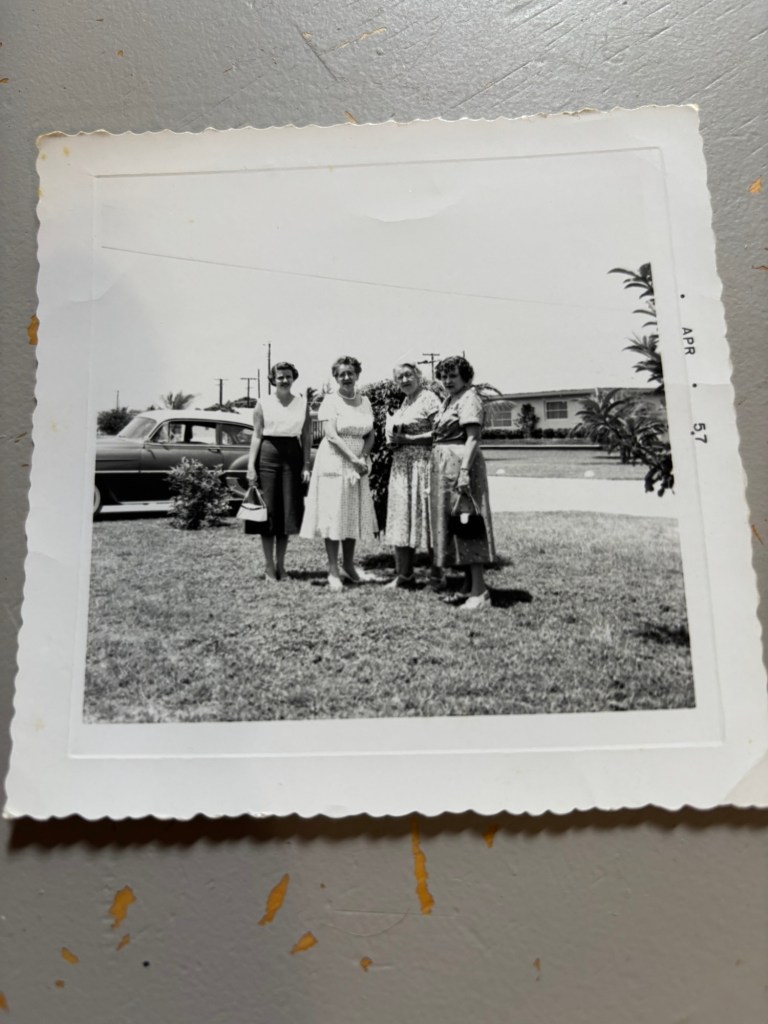
As you look at old photos, you’ll remember things too. Photos help with sensory recall. Have you ever looked at an old photo from your life, and you can feel the texture of furniture or smell what’s cooking in the kitchen? You might be looking at a photo to jog a specific memory. But then you’ll see some item in the picture, maybe a book on a table, and that will prompt even more memories.
Other sensory tools can help spark your memory. Listen to music from whichever time period you’re trying to remember. What were common fragrances, like nearby flowers? The scent of jasmine from my childhood neighborhood or the smell of approaching rain through a screen door can spark memories for me.
How about the taste of everyday meals from the past? Or the feel of your favorite old fabric? Did you used to walk barefoot on sand or concrete, in a meadow, through a sprinkler on a hot day? Bringing all your senses into old, familiar environments can charge up your memory.
Sometimes sensory memories might bring up old trauma as well. Again, remember to get help while navigating through difficult memories. Don’t try to walk that path alone.
Every Nugget Is Golden
If you still struggle with remembering details, don’t despair. Instead of worrying about what you don’t know, focus on what you do know. If you’re writing about a particular point in time, or a particular place, look at other resources like old newspapers, local history books, or archives. Get your basics from there, and then connect it with what you know about your family, even in small ways.
If I didn’t have specific stories from my mom about how World War II affected her, I could at least find historical information about how World War II was experienced in the city where she lived. I would know her year in school when Pearl Harbor was attacked. I could look up what she and her family would have heard on the radio. I could guess her grandmother had family she worried about back in Europe. I could include all of that in my family history, even if I never had conversations with my mom about it.
As you write your family history or life story, you’re leaving a trail for future generations to follow. Any connections you can make, no matter how sparse they might seem to you, will be golden to those who come after you. They aren’t as close to that history as you are. They don’t have your foundation or context for understanding.
I appreciate knowing my dad served in the Coast Guard. So, I am sharing that nugget in my family history. Future generations might want to know in what ways World War II impacted their ancestors. That tidbit about my dad will give them some insight. Maybe they will add it to information they’ve found through other sources, and it will serve as confirmation.
Maybe a future family member will feel drawn to Coast Guard service and want to know if their family has such roots. Or maybe they will need to write a history report for school about their family in World War II. The nugget my sister remembered for me will be helpful for those future family members.
In the same way, whatever memories you can share and whatever historical connections you can make will be valuable and helpful to future generations of your family. Don’t be discouraged by faded memories. Keep writing, keep asking, keep researching, keep looking at photos or whatever other resources will shine light on a particular era or moment in time. Then share what you find, knowing it will be interesting and helpful to someone down the family line.
 Janet Eriksson